
Utah Jazz Offseason Preview: Turning Potential Into Playoffs
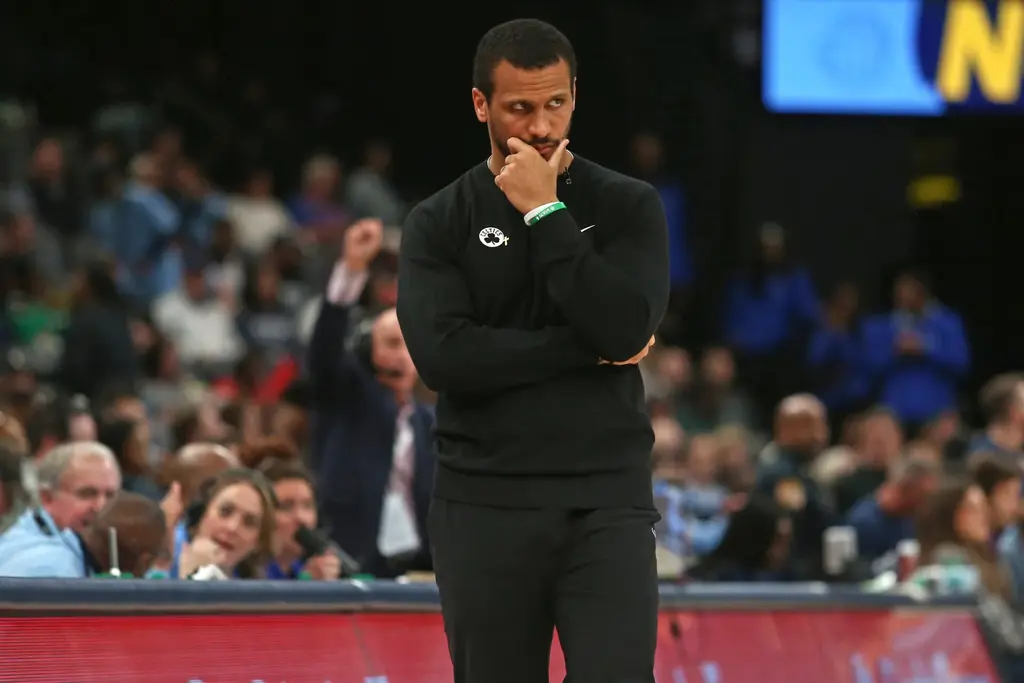
Salt Lake City, UT. - The coffee was still hot when Joe Mazzulla walked into the Utah Jazz practice facility for the first time as head coach, but the problems were already clear.
Walker Kessler didn't want to be there. Cameron Boozer was shooting 32 percent from three. The roster had playoff talent but a lottery record. And looming over everything: Ace Bailey, just 21 years old, watching his promising sophomore season be wasted.
Mazzulla knew what he signed up for when he took the job. The 39-year-old coach, still stinging from his messy exit in Boston, saw opportunity where others saw chaos. But opportunity requires execution, and the Jazz enter the most consequential offseason in franchise history with more questions than answers.
The most pressing: What do you do about your starting center when he's made it abundantly clear he'd rather be anywhere else?
The Kessler Problem No One Wants to Talk About
League sources say the decision on Walker Kessler has already been made—the Jazz are moving on. It's just a matter of when and for what.
"There's no path forward with him," one person familiar with the organization's thinking told The Athletic. "Joe isn't going to spend his first training camp trying to convince a guy to want to be there. That's not how you build culture."
The numbers tell one story: 11.5 rebounds, 2.3 blocks, elite rim protection. The optics tell another: a 7-foot-2 center who publicly undermined his previous coach and has shown zero interest in being part of the solution in Salt Lake City.
Multiple teams have expressed interest, sources say, with Detroit, Chicago, and Phoenix most aggressively pursuing the disgruntled big. But here's where it gets interesting: The Jazz aren't looking for draft capital in return. They're looking for an upgrade.
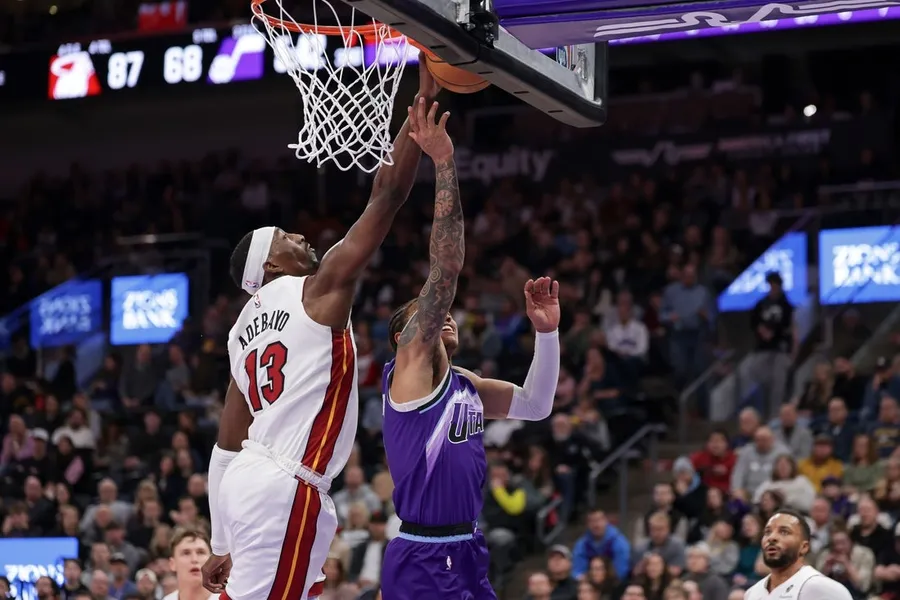
Utah's preferred scenario, according to multiple league sources: Package Kessler—most likely via a three-team trade—with a combination of first-round picks (they own three in 2028 alone, plus three more in 2030) and young guards Isaiah Collier and Walter Clayton Jr. in a deal for either Memphis' Jaren Jackson Jr. or Miami's Bam Adebayo.
Both players represent exactly what Mazzulla's system demands: Versatile bigs who can protect the rim, switch on the perimeter, and space the floor. Jackson averaged 29.1 points and 1.9 blocks last season while shooting 41 percent from three. Adebayo posted 19.8 points, 11.2 rebounds, and made his fifth consecutive All-Defensive team.
"Those are the guys that make sense," said one Western Conference executive who has spoken with Utah about potential deals. "They're not looking for projects. They're looking for proven guys who fit what Joe wants to do defensively."
The challenge: Convincing Memphis or Miami to part with a foundational piece. The Grizzlies, sources say, have been more receptive to discussions than Miami, particularly if Utah is willing to part with multiple unprotected first-rounders. But nothing is close yet. With Miami securing the 3rd overall selection and Tyler Herro testing free agency, now could be the perfect time to Miami to move quickly on Adebayo and set up the Heat for a quick, effective, rebuild.
What Mazzulla Actually Has to Work With
Strip away the Kessler drama and the offseason uncertainty, and there's a legitimate foundation here.
Ace Bailey isn't just good—he's ascending. The 21-year-old averaged 20.5 points on 49.6/44.5/76.0 shooting splits last season, numbers that place him among the league's elite young scorers. He can create his own shot, defend multiple positions, and—crucially—hasn't complained once despite consecutive losing seasons.
"Ace is special," one scout who has watched him extensively told *The Athletic*. "He's already a top-30 player in this league, and he's nowhere near his ceiling. The question isn't his talent. It's whether Utah can put the right pieces around him before he starts asking questions."
Anthony Black is the defensive anchor Mazzulla covets, a 6-foot-7 point guard who can guard ones through fours while facilitating at a high level (4.8 assists). His shooting improvement—37.2 percent from three after shooting just 28 percent as a rookie—transformed him from a project into a foundational piece.
Then there's Cam Thomas, whose 23.6 points on 50/43/89 shooting would be the best season of most players' careers. The problem: Thomas is a flamethrower, not a facilitator. He's instant offense off the bench, but can he be the secondary star a contender needs?
"That's the question they're wrestling with," said a rival executive. "Is Cam your sixth man on a championship team, or is he your second option on a good-but-not-great team? Because those are very different roster constructions."
Cameron Boozer's development looms large. The 20-year-old son of Jazz legend Carlos Boozer showed flashes—16.6 points, 5.8 rebounds, excellent vision (3.2 assists)—but his shooting woes (40.6 percent from the field, 31.9 percent from three) are concerning for a player whose value is supposed to be floor spacing.
Mazzulla, sources say, believes Boozer's shooting will come around with better shot selection and mechanical tweaks. But that's a projection, not a certainty.
The Financial Chess Match
The Jazz will have approximately $67 million in cap space this summer before extensions, assuming they move Kessler's $25 million salary. That number shrinks considerably once they re-sign Anthony Black—a restricted free agent who will command something in the $15-20 million per year range.
Keyonte George is also a restricted free agent, and the Jazz face a decision: Bring him back as a sixth man (likely three years, $30-40 million), or let him walk to preserve flexibility?
League sources suggest Utah prefers to retain George if the market stays reasonable, particularly if they can't land a secondary scorer via trade. His 15.5 points and 41.7 percent three-point shooting off the bench provided crucial scoring punch when the starting unit stalled.
But if another team offers significantly more—say, four years and $60 million with a starting role—the Jazz won't match. They're not in the business of overpaying for sixth men.
The other pending decisions are easier: Dorian Finney-Smith's team option will be declined (3.1 PPG doesn't justify a roster spot). Josh Green won't return. Jaime Jaquez Jr. likely walks, with Koa Peat—who shot 38.1 percent from three in limited minutes—ready for expanded opportunities.
Moussa Diabaté is the wild card. The Jazz loved his energy and rebounding (7.0 RPG), but his offensive limitations (54 percent from the free-throw line) make him redundant with Robert Williams III already on the roster. If he's willing to take a minimum deal, he could return. Otherwise, Utah moves on.
The Draft: Trade Down or Trade Later?
The Jazz hold the No. 4 and No. 18 picks in a draft headlined by Slovenian forward Stefan Joksimovic, who will go No. 1 to Sacramento. Notre Dame's Tyran Stokes and Oregon's Tajh Ariza round out the top three.
The problem for Utah: None of the top prospects fit their immediate needs. Bailey is entrenched at small forward. Boozer is developing at power forward. And if they successfully trade for Jackson or Adebayo, center is addressed.
Multiple teams have already called about the No. 4 pick, sources say, with several offering future first-rounders to move up. The Jazz are listening.
"I've been told they're not interested in another project," said one Eastern Conference executive who has discussed trade scenarios with Utah. "They may draft a player at 4, but if he is wearing a Utah Jazz jersey at the Summer League this year? I'll be shocked."
At No. 18, if they keep it, expect a 3-and-D wing or backup big who can contribute immediately. This is where Danny Ainge has traditionally thrived, finding rotation players in the middle of the first round.
The Elephant No One's Mentioning
There's a loaded free-agent class potentially available this summer: Nikola Jokić, Giannis Antetokounmpo, Karl-Anthony Towns, Anthony Davis. All have player options or contract situations that could make them available.
But league sources say the Jazz aren't banking on landing a mega-free agent through traditional recruitment. They know their limitations as a destination.
"They're not delusional," said one person with knowledge of Utah's thinking. "They're not sitting around hoping Giannis wakes up and decides he wants to play in Salt Lake City. They're being aggressive on the trade market where they actually have leverage."
That leverage comes in the form of draft capital: Three first-rounders in 2028 (Warriors, Heat, 76ers), three in 2030 (their own, Thunder, Nets), plus their own picks extending into the next decade. It's the kind of war chest that can facilitate blockbuster trades other teams can't match.
What Success Looks Like
Ask around the league what a successful summer looks like for Utah, and you get a consistent answer: Land one of Jackson or Adebayo, retain Black and George, and fill out the second unit around them.
Do that, and the Jazz are a playoff team.
"If they execute," said one Western Conference scout, "you're looking at a starting five of Black, Thomas, Bailey, Boozer, and either JJJ or Bam. That's a top-six seed in the West. That's a team that can win a playoff series."
The alternative—standing pat, hoping Kessler's attitude improves, banking on internal development—is untenable. Bailey is too good, and his timeline too short, to waste another year hoping things work out.
Mazzulla knows this better than anyone. He watched the Celtics waste opportunities in Boston, saw how quickly windows close in the NBA. He didn't take this job to rebuild slowly.
"Joe's not here to develop talent for five years and hope it comes together," said someone close to Mazzulla's thinking. "He's here to win now. That's the mandate Danny gave him, and that's what he expects to do."
The pieces are there. The plan is forming. All that's left is execution—and in the NBA, that's where things usually fall apart.
The Jazz are betting this summer will be different.
What We're Watching
- The Kessler trade market: Memphis appears most motivated, but can the Grizzlies part with Jaren Jackson Jr.? A three-team structure involving a third big-needing team could unlock the deal.
- Anthony Black's extension: Expect negotiations to heat up in July. Four years, $72 million feels like the ballpark, but another team could try to pry him away with an offer sheet north of $80 million.
- Keyonte George's market: If a team offers him a starting role and $15 million per year, does Utah match? Sources suggest they'd let him walk at that number.
- Plan B if the big trade doesn't materialize: The Jazz need a backup plan if Jackson and Adebayo prove unattainable. Does that mean pivoting to a Myles Turner-type deal? Or spending big in free agency on a lesser name?
The answers will define not just Utah's next season, but potentially the next decade of Jazz basketball.



 I'm a hoe