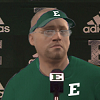

After easing back into football at Hawaii, the former Arkansas coach is taking another step toward the game — this time in a more hands-on defensive role.
By Mason Calloway

Porter Davis is not becoming a head coach again.
He is not taking over a defense. He is not returning to the SEC. He is not stepping back into the kind of job that once consumed nearly every waking hour of his life.
But he is moving closer to football.
Air Force announced Tuesday that Davis has been hired as a defensive quality control coach, giving the former Arkansas head coach his first official staff position since resigning from the Razorbacks amid health concerns and COVID uncertainty in 2020. The title is modest, and by design, the role does not make Davis one of the Falcons' full-time on-field assistants. Still, those familiar with the move described it as a meaningful step forward for a coach who spent the past year proving he could be around the game again without losing the balance he fought so hard to find.
Davis spent the 2021 season as a consultant at Hawaii, a loosely defined role that allowed him to assist with recruiting, defensive concepts, practice structure and game-planning ideas without returning to the day-to-day grind of coaching. The arrangement was supposed to be temporary and low-pressure. Instead, it became one of the quieter success stories of the season.
With Davis helping behind the scenes, Hawaii landed Louisiana graduate transfer quarterback Jordan McAlary, who had played for Davis during a record-setting 2017 season with the Cajuns. McAlary revived his career in Honolulu, throwing for more than 4,200 yards and 37 touchdowns while helping the Rainbow Warriors reach the Mountain West Championship Game before falling narrowly to Utah State. Hawaii later capped the season with a dramatic Hawaii Bowl win over Memphis, with McAlary playing the hero and embracing Davis on the field afterward.
For Davis, that season mattered.
It reminded him that football could still be part of his life. It also reminded others that his impact had not disappeared.
Air Force noticed.
"Being at Hawaii was important for me," Davis said. "It gave me a chance to be around the game again without jumping all the way back into it. I learned a lot about what I can handle, what I enjoy, and what I don't need in my life anymore."
The Air Force job offers a little more structure and a little more responsibility. Davis is expected to work closely with the defensive staff on film study, opponent tendencies, practice planning, scout-team preparation and weekly defensive organization. He will be allowed to spend more time in meetings and around players than he did at Hawaii, but he will not be responsible for running a position group, calling plays or carrying the recruiting load of a full-time assistant.
In other words, it is more than consulting, but less than a full return.
For now, that is exactly what Davis wants.
"I've been careful about this," Davis said. "I don't want to pretend I'm ready for something I'm not ready for. This gives me a chance to coach, to help, to be part of something, but also to do it in a way that still makes sense for my health and my family."
The football fit is obvious.
Air Force has long been built on discipline, development, toughness and defensive structure. Those are the same principles that defined Davis' best teams at Louisiana and Arkansas, where he built a reputation as one of the sport's sharpest defensive minds. His teams rarely overwhelmed opponents with recruiting rankings alone. They won through preparation, leverage, pressure, and an ability to make more talented teams uncomfortable.
That background made the Falcons an intriguing match.
But Davis said the pull went beyond football.
"This place means something," Davis said. "I come from a long line of military service. My grandfather served. My father served. I've got uncles who served. Those were the men I looked up to growing up."
He paused before continuing.
"When Air Force reached out, it wasn't just another job. It felt like a call. It felt like a chance to be around people who understand service, sacrifice and purpose. Football is part of it, but it's not the only part."
Those close to Davis say that piece of the decision mattered more than many might realize. After Arkansas, Davis spent months reevaluating the life he had built and the toll it had taken on him. Hawaii helped him rediscover the joy of football. Air Force, in his mind, offered something deeper: a way to attach football to a mission that felt larger than wins and losses.
Air Force head coach Troy Calhoun praised Davis' football background but emphasized that the hire was also about fit.
"Porter has an outstanding mind for defense and player development," Calhoun said. "But more than that, he understands what it means to be part of something bigger than yourself. That's important here. We think he'll be a tremendous resource for our staff and our players."
The hire has already generated attention throughout the coaching world, in part because Davis' name still carries weight. Before stepping away, he had authored one of the fastest rises in recent college football history. He helped rebuild Louisiana, won multiple conference championships, then took over a 2-10 Arkansas program and transformed it into a 12-2 SEC champion and Sugar Bowl winner in one season.
At the time, Davis seemed destined for one of the biggest jobs in the sport.
Then his health forced everything to stop.
The years since have changed him. The old version of Davis rarely sounded satisfied. Every win seemed to point toward the next game, the next opponent, the next challenge. The current version speaks more carefully. He talks about balance. He mentions family often. He seems far less interested in proving he belongs and far more interested in making sure whatever comes next is worth the cost.
That is why Tuesday's announcement felt important.
It was not the grand return many once imagined. It was not a press conference introducing Davis as the savior of another program. It was something smaller, quieter and perhaps more honest.
A coach who nearly lost football entirely has found his way back to the game, one step at a time.
First Hawaii.
Now Air Force.
What comes after that remains uncertain, and Davis does not sound especially eager to answer that question yet.
"I'm not looking too far ahead," he said. "I did that for a long time. Right now, I'm grateful for Hawaii giving me a chance last year, and I'm grateful Air Force believes I can help. That's enough for me."
For now, Porter Davis is coaching again.
Not all the way back.
Not the way he once did.
But closer than he has been.