Generational prospect soon come.

The MLB needs to allow trading of picks for real



Generational prospect soon come.
The MLB needs to allow trading of picks for real

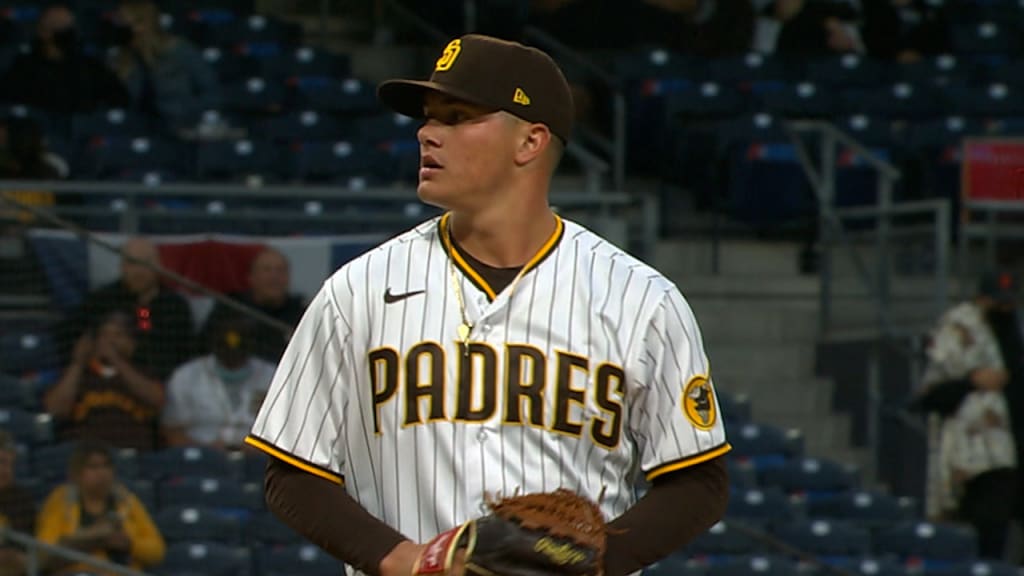
Morejon, 27, posted a 4.03 ERA over 82.2 innings in 2026, allowing 37 runs with a 1.17 WHIP and a 4.14 FIP. The workload was among the heaviest for any reliever in the National League, and the underlying numbers suggest the results were roughly what he earned.
The Angels are paying for the year before. In 2025, Morejon threw 73.2 innings with a 2.08 ERA, a 0.90 WHIP and a 2.14 FIP, one of the best seasons by any left-handed reliever in baseball. The FIP is what makes the case interesting. A 2.14 mark means the strikeouts, walks and home runs all supported the ERA rather than getting bailed out by defense or sequencing, which is the difference between a fluke season and a repeatable one.
The 2026 decline showed up in the same places. The FIP rose two full runs alongside the ERA, meaning the walk rate and the home run rate both moved in the wrong direction. That is a real regression, not bad luck, and the Angels are betting it is correctable.
Morejon has been in the majors since 2020, when he debuted with San Diego at 21 after signing as one of the top international prospects of his class. Tommy John surgery cost him most of 2021 and 2022, and he did not become a full-time reliever until 2024. .
He joins a bullpen that has been almost entirely reconstructed. Robert Stephenson, Jordan Romano and Drew Pomeranz all reached free agency, and general manager Kim Ng has replaced them with Brusdar Graterol on a one-year deal, Connor Phillips in the Jo Adell trade and Sam Hentges in last week's Reid Detmers deal. Ben Joyce, who converted 27 saves with a 2.18 ERA, remains the closer.

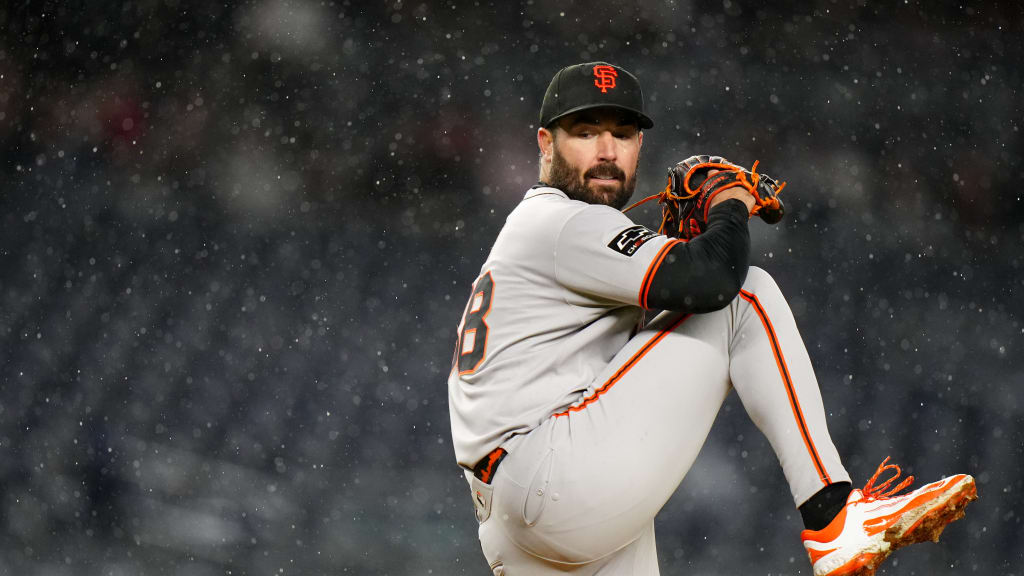
Ray, 35, went 5-12 with a 3.75 ERA over 32 starts for San Francisco in 2026, posting a 1.30 WHIP and a 4.13 FIP. The gap between the ERA and the FIP is the concerning part. It suggests the run prevention outpaced the underlying performance, and the walk rate that has followed him his entire career has not improved with age.
The Angels are not pretending this is more than what it is. Ray won the American League Cy Young with Toronto in 2021 and has been in steady decline since, interrupted by Tommy John surgery that cost him nearly all of 2023 and 2024. The one-year term reflects that. Los Angeles gets innings and a veteran presence for a young staff without committing past 2027.
The need was real. The Angels traded Alek Manoah to Baltimore and Reid Detmers to San Francisco this offseason, leaving Grayson Rodriguez, Rhett Lowder and George Klassen as the only starters with major league experience on the roster. Lowder has not pitched in the big leagues since 2024 and Klassen made his debut last April, finishing 0-3 with a 4.74 ERA in 24.2 innings across two stints.
Ray gives manager Rocco Baldelli a fourth arm and, more importantly, someone who can be counted on for 170 innings. Rodriguez threw 157 last season and no one else on the staff cleared 100.
Newcomb, 33, posted a 2.13 ERA over 80.1 innings split between the Chicago White Sox and Philadelphia in 2026, with a 1.06 WHIP and a 3.83 FIP. The workload put him among the more heavily used relievers in either league.
The FIP is the caveat. A 3.83 mark against a 2.13 ERA suggests the results ran well ahead of the peripherals, and the Angels are structuring the deal accordingly. One year limits the exposure if the run prevention regresses toward what the strikeout and walk numbers support.
Newcomb has had an unusual career arc. Atlanta's first-round pick out of Hartford in 2014, he arrived as a starter and made 30 starts in both 2018 and 2019 before command problems pushed him to the bullpen. He has since pitched for six organizations, and the last two seasons have been the most effective stretch of his career.
He joins a bullpen that lost Robert Stephenson, Jordan Romano and Drew Pomeranz to free agency. Kim Ng has replaced them with Brusdar Graterol and Adrian Morejon in free agency, Connor Phillips in the Jo Adell trade and Sam Hentges in the Reid Detmers deal. Ben Joyce, who converted 27 saves with a 2.18 ERA, remains the closer.
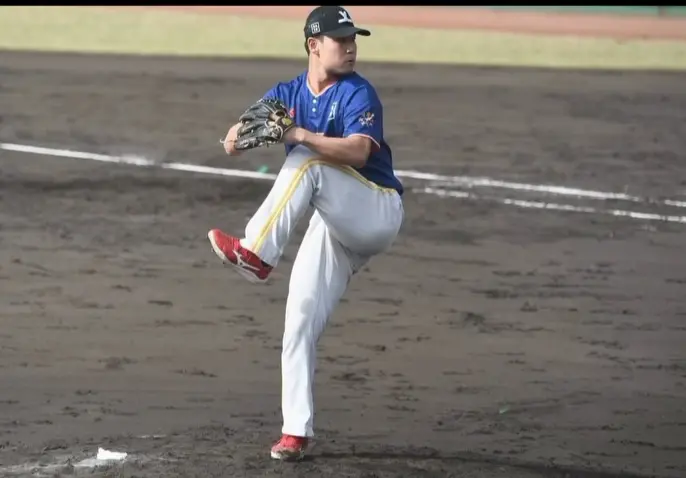
Kinjo spent the last two seasons with the Kochi Fighting Dogs of Japan's Shikoku Island League, an independent circuit outside Nippon Professional Baseball. He moved into the rotation full time in 2026 after working mostly in relief the year before, and the results improved sharply as the walks came down.
The fastball is the reason he is here. Kinjo has been clocked at 97 and 98 mph and has spent the past two winters chasing triple digits, documenting the pursuit on social media. He pairs it with a sinker, a curveball and a changeup, a four-pitch mix that gives him a path to starting rather than a straight relief profile.
The command is the question. Kinjo walked batters at an alarming rate in 2025, and while the second year in Japan showed real progress, he has never faced hitters at anything close to a major league level. He did not pitch in NPB and came to professional baseball out of college rather than through the Japanese high school system that produces most of the country's exports.
The Angels have him competing with Grayson Rodriguez, Robbie Ray, Rhett Lowder and George Klassen for five rotation spots, which is less crowded than it sounds. Ray is the only one of the group who made 30 starts last season. Lowder has not pitched in the majors since 2024. Klassen made his debut last April and finished with a 4.74 ERA in 24.2 innings.
That is the opening general manager Kim Ng is selling. A pitcher with Kinjo's background would normally be assigned to Double-A and given two years to develop. In Anaheim he gets a look in March.
Manager Rocco Baldelli, who spent a decade in Tampa Bay before taking over in Minnesota, has built his career on getting production from arms other organizations passed on. Kinjo is the first real test of that in Los Angeles.
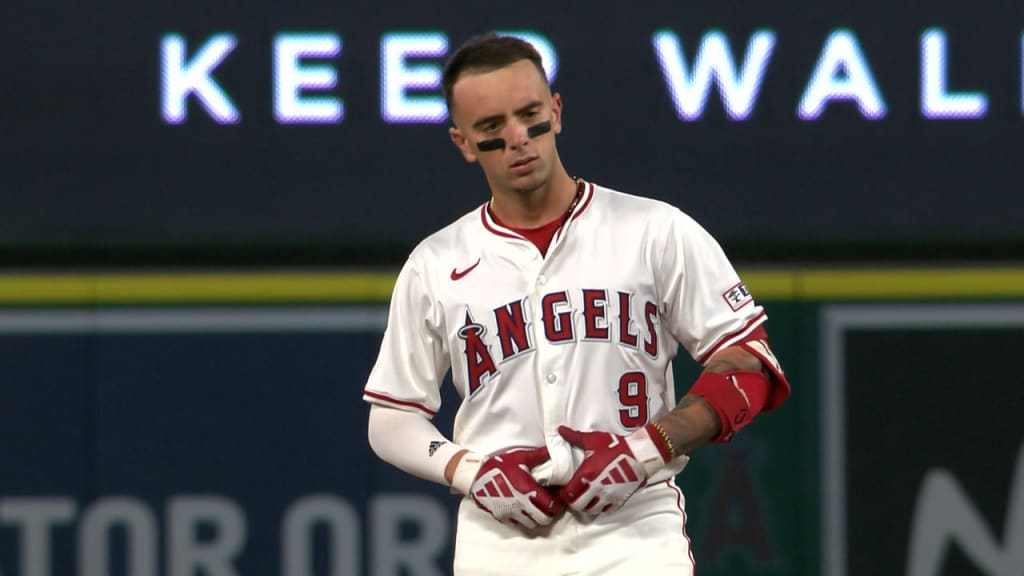
Zach Neto was the exception that mattered. The shortstop won his hearing and was awarded $10.3 million, the largest figure in the group by a wide margin and the clearest sign that the long-term extension the Angels talked about in November never came together. Neto hit .246 with 32 home runs, 75 RBIs and 81 runs scored in 2026 and was the only regular in the lineup who produced at a level a contending team would want. He is now under club control through 2029 and going year to year.
The club took the majority. Grayson Rodriguez lost at $3 million after going 8-14 with a 5.04 ERA. Ben Joyce lost at $2.1 million despite converting 27 saves with a 2.18 ERA, which is a reminder that arbitration weighs saves and service time more heavily than quality. Logan O'Hoppe lost at $4 million, Rafael Marchán at $1.5 million, Oswald Peraza at $1 million and José Siri at $860,000.
Brenton Doyle lost at $6.3 million, which was predictable. The Angels acquired him from Colorado this winter for his glove, and a .204 season with seven home runs gave the club an easy case to argue. He is signed for a figure that reflects the two-time Gold Glove winner's defensive value and almost nothing else.
The players who won were the ones with the cleanest numbers. Sam Hentges took the largest player victory at $7.6 million after posting a 4.40 ERA over 75.2 innings for San Francisco. Chase Silseth won at $2.7 million on the strength of a 2.54 ERA and 93 strikeouts in 71 innings. Josh Lowe won at $7.5 million and Nolan Schanuel at $2.8 million.
The volume is what stands out. Most front offices settle the majority of their cases to avoid the exercise entirely, since a hearing requires the club to spend an afternoon explaining to a player why he is worth less than he thinks. Kim Ng took 12 of them to the wire in her first winter running the Angels.