
Pittsburgh Steelers Draft Preview
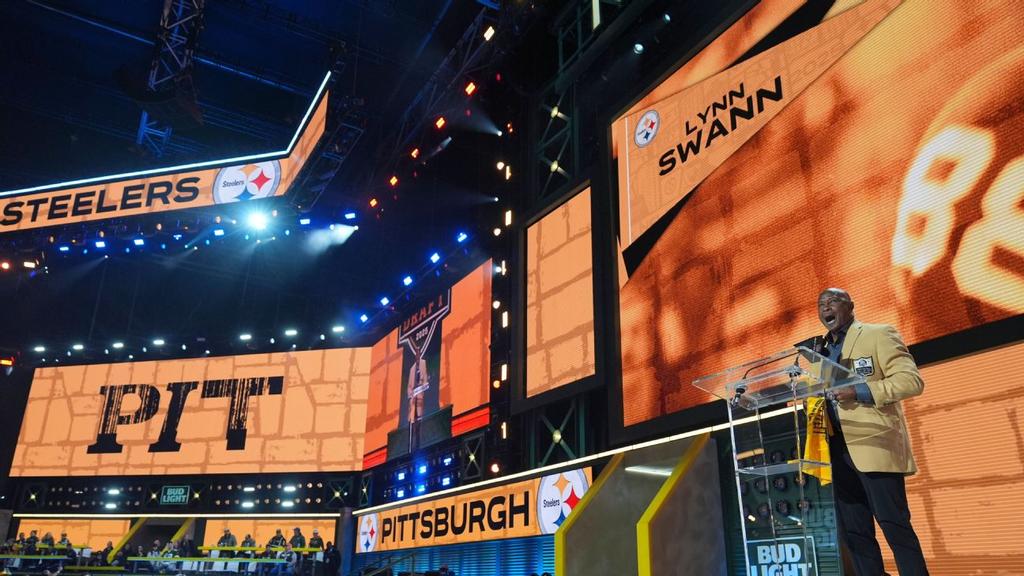
Pittsburgh, PA. - With the bulk of free agency wrapped up and Cooper DeJean secured as the marquee addition, attention now turns to the NFL Draft, where the Pittsburgh Steelers will look to leverage their seven total picks—including a pair of first-rounders—to fill out depth and identify future starters across both offensive and defensive units.
While the Steelers possess two first-round selections—their own at No. 31 and Carolina's at No. 21, acquired in last year's trade down from No. 2—don't expect both picks to be used on draft night.
"The word out of Pittsburgh is they're going to leverage at least one of those for a future first-round pick, especially if one of the top quarterbacks starts falling and a team gets desperate," one NFC executive said. "They don't have any pressing needs to address right now. Anthony Richardson is locked in long-term, they just spent big on DeJean, and the roster is built to win now."
The logic is sound. With Richardson entrenched as the franchise quarterback for the foreseeable future, the Steelers have no interest in any of the top signal-callers projected to go in the top 10. That makes the No. 5 pick extremely valuable trade bait, particularly if a quarterback-needy team falls in love with a prospect and wants to jump ahead of other suitors.
The strategy aligns with Pittsburgh's current roster construction. They're in win-now mode with Richardson's MVP window and a championship-caliber defense, but they're also thinking ahead to 2029 and beyond when significant contracts come due. Banking an extra first-round pick for future flexibility could prove invaluable when the cap crunch intensifies.
Even if the Steelers do trade down, they still have clear positional targets to address:
Right Guard: With Mason McCormick signing elsewhere and Patrick Mekari only on a one-year deal, Pittsburgh needs a long-term answer at the position. Expect them to target an athletic, road-grading guard who can pull in the run game and handle power rushers in pass protection.
Linebacker Depth: Behind Payton Wilson and Patrick Queen, the depth chart gets thin quickly. Adding a developmental linebacker who can contribute on special teams while learning behind two elite starters makes sense, particularly given Flores' preference for versatile, athletic defenders.
Cornerback Depth: With DeJean, Ramsey, and Porter locked in as the top three corners, Pittsburgh could still use another body in the room—especially if they plan on moving on from Ramsey after 2028.
Offensive Line Depth: Swing tackle and interior line depth remain needs, particularly with the offensive line aging and injury concerns always looming.
Here's a quick look at the prospects the Steelers are reportedly targeting throughout the draft:
Here are expanded scouting reports for each Steelers target:
QB Glen Wolff – Memphis
Scrambler | Projected: 1st Round Grade / Likely 2nd Round
Wolff is the quintessential modern RPO quarterback — a master of the quick-rhythm passing game who can extend plays with his legs when the pocket breaks down. His short and intermediate accuracy is genuinely special, consistently delivering the ball on time and on target within the structure of the offense. The concern is everything beyond 15 yards: the arm simply doesn't generate the velocity or trajectory needed to threaten NFL defenses deep, which will limit the offensive ceiling of any team that builds around him. Athleticism is a legitimate plus and has bailed him out of bad situations more than once. Questions about the level of competition he faced at Memphis will follow him through the draft process, and teams will want to know if his quick-game mastery was schemed or instinctive. A developmental QB2 with starting upside in the right system — one that protects his arm limitations.
QB Rayshon Davis – Georgia
Scrambler | Projected: 1st Round Grade / Likely 2nd Round
Davis is the more physically gifted of the two signal-callers in this range, with a slightly stronger arm and perhaps the better improvisation skills when plays break down. He showed the ability to extend drives with his legs while keeping his eyes downfield — a skill that translates at the next level. His accuracy in and outside the pocket is among the best in this class, and he demonstrated a genuine feel for manipulating defenders with his eyes. The elephant in the room is character: whatever concerns have surfaced during the pre-draft process are significant enough to knock a top-10 talent out of the first round entirely, which is a major red flag for any franchise investing in a quarterback. Pittsburgh would need to do extensive due diligence before pulling the trigger. The talent is undeniably there — the question is whether the organization is comfortable with the risk.
LG Cam Gray – Auburn
Pass Protector | Projected: 1st–2nd Round
Gray is a technician in pass protection — his hand placement, footwork, and ability to mirror speed rushers are all polished beyond his years. He has the makings of a quarterback's best friend in a pass-heavy system. The problem is the run game, where he struggles to generate movement at the point of attack and often gets caught reaching or over-extending on combo blocks. In Pittsburgh's run-first identity, that limitation looms large. A team that throws 60% of the time would love him — the Steelers would need to weigh whether his pass protection excellence compensates for what he can't do on early downs.
LG Andrew Garcia – Tennessee
Agile Blocker | Projected: ~30th Overall
Already featured in the main draft board, Garcia is a zone-scheme specialist whose athleticism and movement skills set him apart from traditional guards. He thrives when asked to pull, reach, and create in space — the kind of lineman that makes outside zone runs look effortless. The Steelers' recent schematic evolution toward more zone concepts makes him an intriguing fit. He won't be your best run blocker in a phone booth, but his versatility and football IQ give him a starting floor. At 30, he represents solid value if Pittsburgh can get him there.
LG Max Byron – Louisville
Power Blocker | Projected: 2nd–3rd Round
Byron is as physically imposing as any guard in this class — his bench press numbers are reportedly the best among interior linemen, and it shows on tape. He is an absolute mauler in the run game, the kind of guard who drives defenders into the second level and finishes through the whistle. The technique, however, is raw: he tends to rely on his strength to bully his way through reps rather than using proper hand placement and angles, which gets him into trouble against quicker, more refined pass rushers. A coaching staff that can clean up his fundamentals could unlock a legitimate starter. High floor as a situational run-blocking specialist; high ceiling if the technique catches up.
RG Jimmy Sanchez – Oregon State
Agile Blocker | Projected: 2nd–3rd Round
Sanchez is the definition of a safe, reliable interior lineman — he does a lot of things competently without doing any single thing at an elite level. His consistency and dependability are real traits in a position group that values them, and he rarely had bad games even against quality competition on the Pac-12 edge. He won't be a Pro Bowler, but he also won't be a liability. For a team looking for depth or a plug-and-play starter, Sanchez checks the box. Pittsburgh might view him as a serviceable developmental starter at right guard without spending premium capital.
CB Andrew Washington – LSU
Man Coverage | Projected: 2nd–3rd Round
Washington has the size and physicality you look for in a press-man corner — he can get into receivers at the line and disrupt timing at the snap. The problem is that his overall cornerback skills don't match his physical profile: his hips are stiff, his transition out of breaks is below average, and his ball skills leave something to be desired. He's a projection in every sense of the word. The tools are there to develop into a matchup corner in the right system, but the polish isn't close to draft-day ready. Best suited as a depth signing who can contribute on special teams while the coaching staff works on his technique.
FS Matthew Graham – Michigan State
Run Support | Projected: 1st–2nd Round Grade / Likely 2nd Round
Graham is a hard-nosed, downhill safety whose enthusiasm and physicality near the line of scrimmage are his calling card. The 1st-round grade attached to his name feels like a generous assessment — his zone coverage deficiencies are significant, and the inability to consistently handle his responsibilities in the deep half is a genuine concern at the next level. In that sense, he mirrors Kopp with a slightly different athletic profile. He's a tone-setter and a run defender first; teams need to be realistic about what they're getting in coverage. Best fit in a two-safety system where his run-stopping ability is maximized and coverage duties can be minimized.
FS Mac Kopp – West Virginia
Run Support | Projected: 2nd–3rd Round
Kopp is a throwback strong safety masquerading as a free safety — his best football is played within 8 yards of the line of scrimmage, where his physicality and instincts make him a genuine weapon against the run. The coverage limitations are a real obstacle to becoming a full-time starter in today's NFL, where safeties are asked to carry significant coverage responsibilities. His value is tied to scheme: in a defense that can hide him in the box and protect him with a coverage-capable partner, he's a quality starter. On his own in a two-high system, the limitations are exposed.
SS Marc Pineda – Stanford
Zone Coverage | Mocked #23 – Baltimore
As noted in the main board, Pineda is a cerebral, zone-first safety whose football intelligence is his greatest asset. His ability to read the quarterback, anticipate routes, and communicate pre-snap puts him in the right spot more often than not. He's an ideal center fielder in a Cover 2 or Cover 3 scheme. The tackling concerns are real — he's not a finisher and can miss in the open field — but his range and awareness compensate for the physical limitations. Baltimore makes sense as a landing spot. Pittsburgh should monitor him as a potential trade-up candidate if they covet the position.
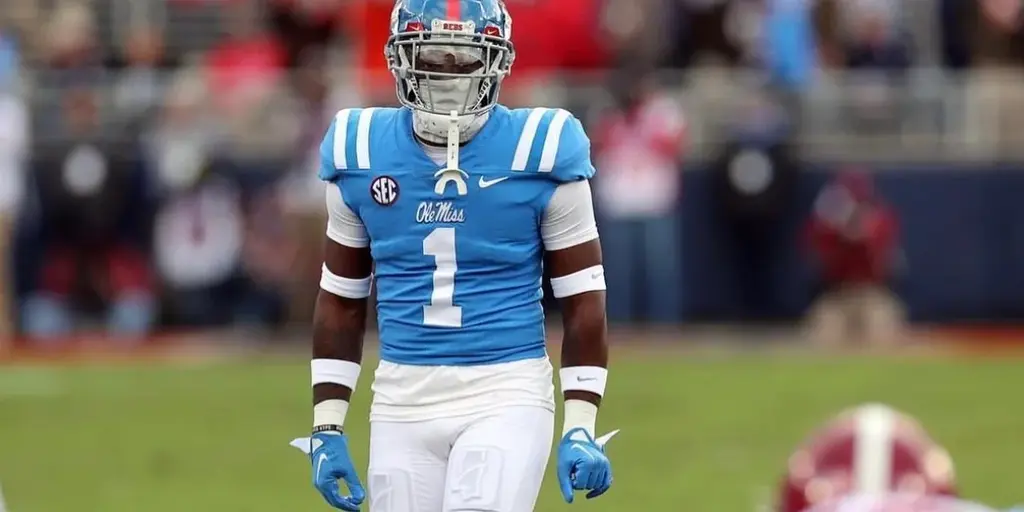
SS Jermaine Ward – Ole Miss
Hybrid | 1st Round Grade / Not In Current Mock
Ward is the most complete safety in this class — a true hybrid whose athleticism, instincts, and tackling ability make him equally effective against the run and the pass. He can match up in man coverage against tight ends, drop into zone, play in the box, or patrol the deep half without missing a beat. The fact that he's not in the current first-round mock is puzzling and likely a reflection of positional value debates rather than talent. For Pittsburgh, Ward would be an ideal complement to whatever direction they take at the other safety spot. He's the kind of player you move up to get.
SS Andrew Foster – Oklahoma
Zone Coverage | Projected: 1st–2nd Round
Foster processes information well and shows solid awareness of his zone responsibilities — the instincts are clearly there at the college level. The issue is translating that mental processing into physical positioning: he's often a step late getting to where he needs to be, which leaves him out of place in critical moments. That conversion from recognition to execution will need to sharpen significantly to hold up against NFL offenses. A coachable player with a solid foundation, but he's more of a depth piece early in his career than a reliable starter.
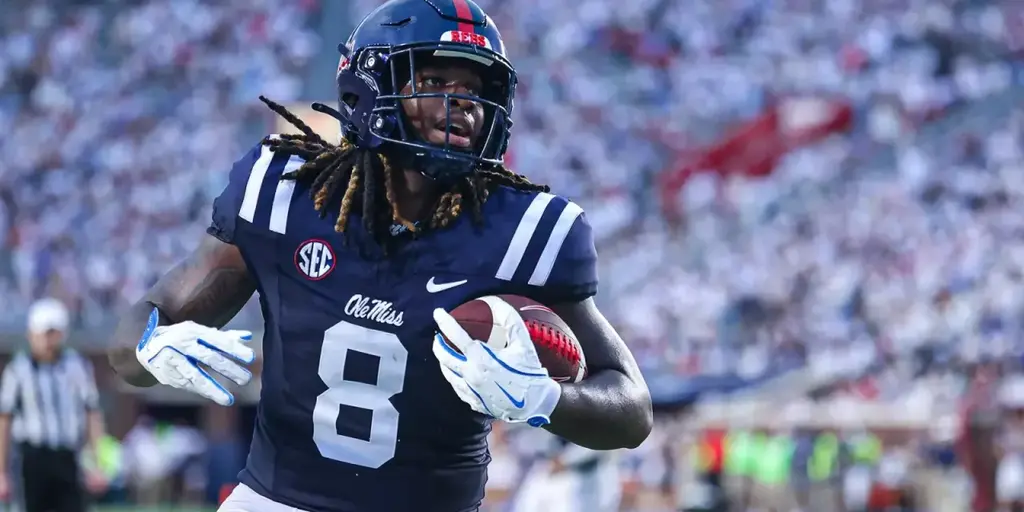
TE Gabe Gomez – Ole Miss
Possession/Receiving | 1st Round Grade / Not In Current Mock
Gomez is the most dynamic receiving tight end in this class and the kind of mismatch weapon offensive coordinators dream about. At 6'3", 236 lbs, he can split wide and stress defenses the way very few tight ends can — his athleticism and route running ability are genuinely special. The blocking is a real problem though, and his frame may structurally limit how much he can ever improve in that area. At his size, he'll struggle to hold up against edge rushers and physical linebackers at the point of attack, limiting his use on early downs in a traditional two-TE set. He's a receiving specialist and matchup piece — a luxury for a team that can scheme around his blocking limitations, but a risk for one that can't.
TE Tony Castillo – Penn State
Possession | Projected: 1st–2nd Round / Not In Current Mock
The Freiermuth comparison is apt and should resonate deeply in Pittsburgh. Castillo isn't going to blow up the combine, but he's a savvy, technically sound receiver who finds soft spots in zone coverage and rarely drops catchable balls. His blocking is functional — not a standout, but reliable enough to keep him on the field on all three downs. What he lacks in athleticism, he makes up for with feel and execution. He's the kind of tight end that quietly becomes a quarterback's safety valve and accumulates 650 yards before anyone outside the building notices. The Steelers have a proven track record of developing this exact archetype.
G Nicholas DeVoe – Ole Miss
Pass Protector | Day 3 Grade
DeVoe shows genuine pass-protection instincts — his understanding of blocking concepts and ability to diagnose stunts and twists stand out on film. The athletic limitations are hard to ignore, though: he doesn't have the quickness or recovery speed to consistently handle premium pass rushers at the next level. The gap between what he understands and what he can physically execute keeps him firmly in Day 3 territory. Worth a late-round flier as a developmental interior lineman whose football IQ could help him carve out a roster spot.
LB Nick Sanchez – USC
Pass Coverage | Projected: 1st–2nd Round / Not In Current Mock
The Dre Greenlaw comparison gives you a clean picture of the ceiling here — a speed-and-range linebacker whose athleticism and instincts make him a difference-maker in coverage and as a blitzer. Sanchez has the tools to become a three-down linebacker in a system that asks him to run and think rather than simply anchor against the run. His ability to read the quarterback and anticipate routes is well ahead of most linebackers in this class. If the talent evaluations are right, he's a steal anywhere in the second round and a potential chess piece for a defense that wants to play fast.
MLB Malcolm Lawrence – Texas
Run Stopper | Projected: 2nd–3rd Round
Lawrence won't win any awards at the combine — he's the least athletically gifted of the top three middle linebackers in this class — but what he lacks in measurables, he makes up for in film study and football intelligence. He anticipates plays before they develop with uncanny accuracy, consistently putting himself in the right gap at the right time. That pre-snap processing is a rare and valuable skill that doesn't always show up on a stopwatch. The athletic limitations will keep him off the field in certain coverage packages, but as a thumping two-down run stuffer with elite instincts, he provides real value.
MLB Connor O'Neill – UCF
Field General | Projected: 1st–2nd Round
O'Neill is the communicator and signal-caller of this linebacker class — his ability to get his defense organized pre-snap and make adjustments at the line of scrimmage is impressive for a college player. The play recognition doesn't always match the communication skills, which creates occasional issues in execution, but his athleticism is good enough to paper over some of those gaps while the mental game catches up. He profiles as a high-upside starter who could develop into a true defensive quarterback if the recognition instincts sharpen. Strong fit for a defense that values a verbal leader at the second level.
MLB Jason Verdon – LSU
Field General | Projected: 2nd–3rd Round
Verdon's combine numbers raised eyebrows, but his tape tells a different story — a linebacker with genuine football intelligence and the awareness to consistently put himself in position to make plays. His diagnostic ability is among the best in the linebacker class, and he reads offensive formations with a veteran's understanding of the game. The physical limitations are real and will factor into his draft stock, but his football IQ gives him a legitimate path to becoming a serviceable starting linebacker in the right system. Think a slightly lower-upside version of O'Neill — less athletic recovery ability, but possibly sharper pre-snap processing.