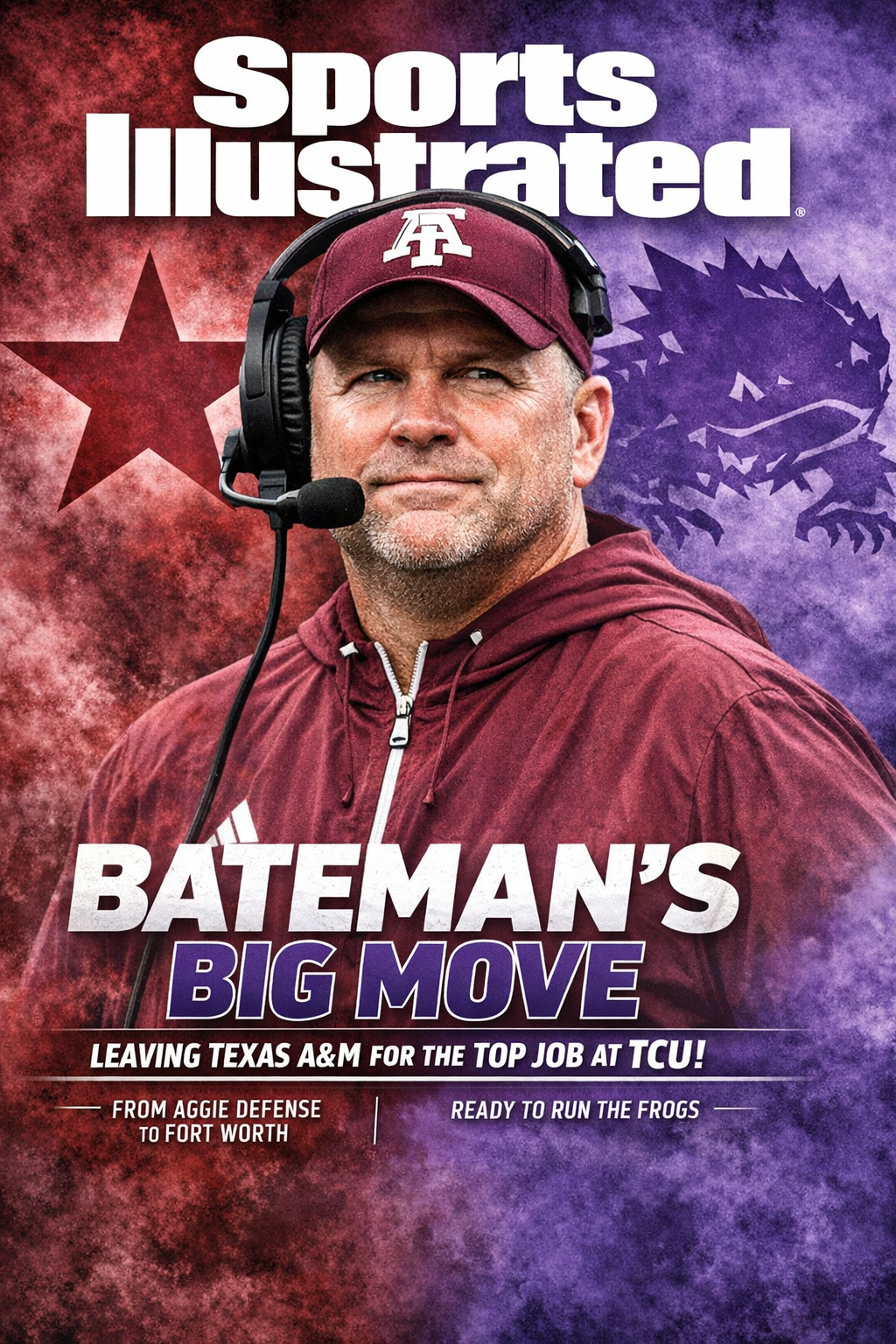
Jay Bateman Leaves Texas A&M, Named New Head Coach at TCU
After building the nation’s most feared defense, Bateman takes the reins in Fort Worth as Sonny Dykes departs for Texas.
A Defensive Architect Like No Other
TCU has made its move — and it’s a seismic one. After Sonny Dykes accepted the head coaching job at Texas, the Horned Frogs wasted no time in securing one of the hottest names in college football:
Texas A&M defensive coordinator Jay Bateman, who now steps into his first Power Five head‑coaching role.
Bateman leaves College Station with a résumé that reads like something out of a video game. His 2028 Texas A&M defense wasn’t just elite — it was historically dominant:
- 11.6 Points Allowed Per Game — #1 in the Nation
- 3,119 Total Yards Allowed — #1 in the Nation
- 222.8 Yards Allowed Per Game — #1 in the Nation
- 165.4 Pass Yards Allowed Per Game — #1 in the Nation
- 57.3 Rush Yards Allowed Per Game — #1 in the Nation
- 72 Sacks (5.1 per game) — #1 in the Nation
- 12 Interceptions — #40 in the Nation
A Trophy Case That Speaks for Itself
During his tenure in College Station, Bateman’s players racked up an absurd list of accolades:
- 4× Edge Rusher of the Year
- 3× Chuck Bednarik Award Winners
- 4× Bronko Nagurski Trophy Winners
- 3× Dick Butkus Award Winners
- 3× Lombardi Award Winners
- 1× Jim Thorpe Award Winner
- 1× National Champion
- 1× SEC Champion
Bateman exits with a
career record of 45–10, cementing himself as one of the most successful assistants in modern Texas A&M history.
Why TCU Wanted Him — And Why He Fits
TCU’s identity under Dykes leaned heavily on offense. Bateman represents a philosophical pivot — a commitment to toughness, discipline, and defensive excellence.
In a Big 12 that’s shifting toward more balanced, physical football, Bateman’s arrival signals TCU’s intent to evolve. His track record developing elite front‑seven talent and building suffocating defensive units gives the Horned Frogs a clear blueprint moving forward.
What This Means for Texas A&M
For the Aggies, this is a significant loss. Bateman was more than a coordinator — he was the architect of the program’s defensive identity and a key figure in its rise to national prominence.
Replacing him won’t be simple. His departure marks the end of one of the most dominant defensive eras in school history.
But it also speaks to the strength of the program: elite assistants get hired away. That’s the cost of success.
What’s Next
TCU gets a proven winner, a culture‑setter, and one of the sharpest defensive minds in the sport.
Texas A&M begins the search for its next defensive leader.
And Jay Bateman steps into the spotlight — no longer the mastermind behind the scenes, but the face of a program ready to take its next step.