Pittsburgh Adds Depth Throughout Day Three
- After a draft defined by blockbuster trades and splashy acquisitions, the Pittsburgh Steelers spent Saturday doing the unglamorous but necessary work of fortifying the backend of a roster built to compete for a championship — selecting four prospects across the fourth through seventh rounds with an eye toward depth, development, and one genuinely compelling reclamation project.
R4 — MLB Diego Ruiz, South Carolina
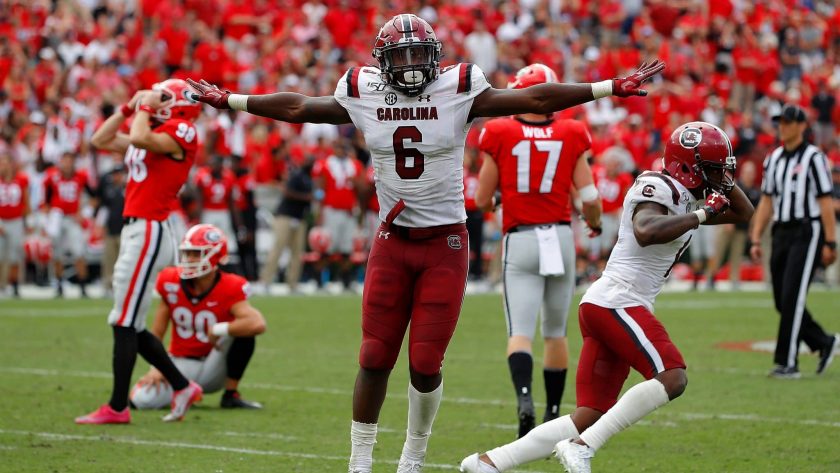
Pittsburgh opened Day 3 with an athleticism investment at linebacker, selecting Diego Ruiz with their fourth-round pick. Ruiz is the kind of prospect that makes defensive coordinators salivate on paper, a heat-seeking missile with elite closing speed and the burst to blow up plays in the backfield before they develop. Brian Flores will find no shortage of creative ways to deploy that athleticism within Pittsburgh's scheme.
The caveat is significant, however. Ruiz's coverage skills lag considerably behind his athletic profile, limiting his early-career utility to situational snaps rather than three-down linebacker work. He projects as a rotational piece and a core special teamer in the short term, with the hope that NFL coaching can refine the coverage deficiencies that kept him out of Day 2 conversation. The ceiling is tantalizing. The floor requires patience.
R5 — DT Fernando Hernandez, Oklahoma
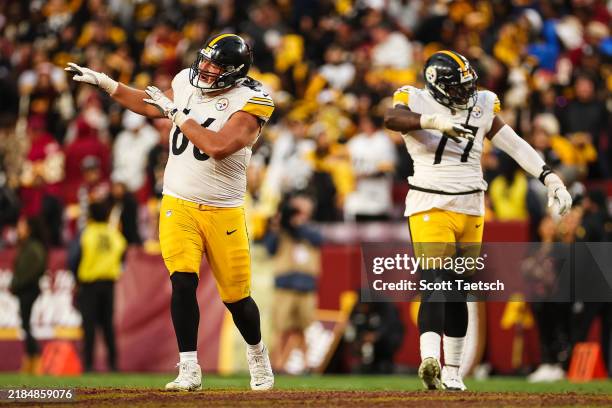
Pittsburgh continued the nose tackle pipeline they established with Tyler Chavez's selection a year ago, adding Oklahoma's Fernando Hernandez in the fifth round, a mammoth interior anchor who uses his considerable size and leverage to clog running lanes and occupy blockers at the point of attack.
Hernandez is not a pass rusher and makes no pretense of being one. What he is, at his best, is exactly what a 3-4 defense needs in the middle, an immovable presence who commands double teams, frees up the linebackers behind him, and consistently wins the battle at the line of scrimmage against the run. The comparison to Chavez is apt in both profile and projection. Pittsburgh appears to have found a developmental formula at the position and is committed to stocking the pantry accordingly.
R6 — RB Brenden Bullough, Rutgers
This is the pick that will generate the most conversation, and the most scrutiny.
Bullough entered the 2030 college football season as a legitimate second or third round prospect, a powerful, physical running back with surprisingly soft hands for his size and the kind of between-the-tackles authority that translates directly to the NFL level. Then the Penn State game happened.
A highly publicized sideline altercation with Nittany Lions linebacker Teddy Byars in which Bullough threw multiple punches and shoved an official in the ensuing scrum resulted in his dismissal from the Rutgers program and sent his draft stock into freefall. The incident has followed him through every pre-draft interview and will continue to follow him into training camp.
Pittsburgh addressed it directly.
"We talked with Brenden extensively about that incident and his time in Piscataway," Scheelhaase said. "We're confident he's grown as a young man, that he recognizes his mistake, and that he will do everything in his power to live up to the Steeler Standard."
It is worth noting, with no small measure of irony, that Byars. the player on the other end of that sideline confrontation, was selected in the second round by the Baltimore Ravens earlier in the draft. The two will meet twice a year in the AFC North for the foreseeable future, a subplot that will not be lost on anyone who watched the original incident unfold.
On the field, Bullough's talent is genuine. The power running ability, the pass-catching out of the backfield, and the physicality that made him a high-profile recruit are all still there. Pittsburgh is betting the character concerns are behind him. The sixth round is exactly the right price for that gamble.
R7 — TE Glen DiNapoli, Penn State
Pittsburgh stayed close to home with their final selection, nabbing Penn State tight end Glen DiNapoli with the 30th pick of the seventh round in what is best described as a project pick with a narrow path to roster contribution.
DiNapoli has the athletic profile to be a genuine receiving threat at the next level — the movement skills, the route running instincts, and the frame that tight end coaches dream about developing. The problem is the hands. DiNapoli's inability to consistently secure contested catches was a persistent issue throughout his college career and represents the primary obstacle between him and a meaningful NFL role. His blocking, similarly, needs considerable refinement before he can be trusted in a run-heavy system like Pittsburgh's.
The Steelers are drafting the upside and the frame, hoping that NFL-level coaching can address the technical deficiencies that limited him in Happy Valley. It is a long shot. In the seventh round, long shots are exactly what you are looking for.
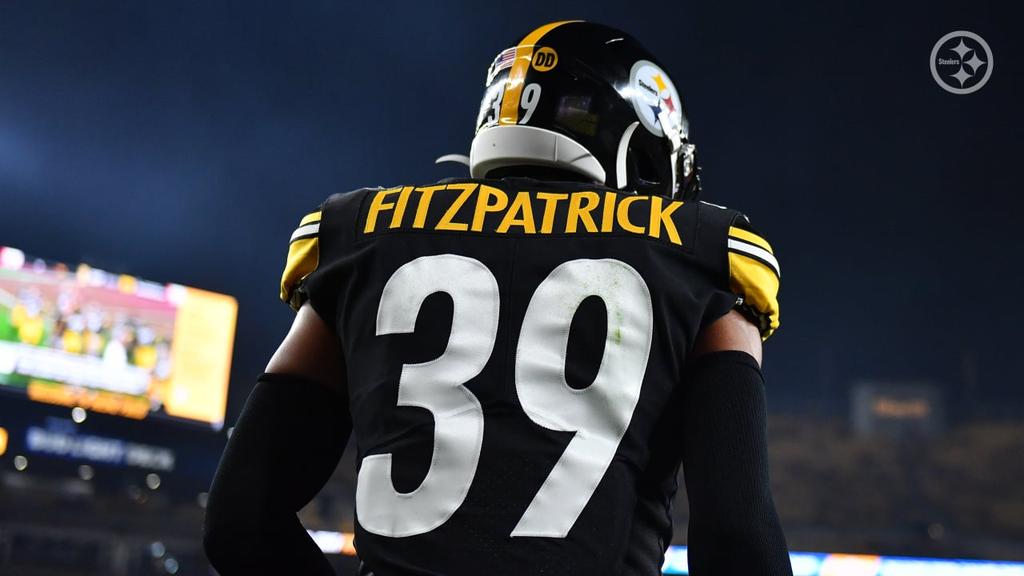
Pittsburgh closes the books on the 2030 NFL Draft with a class headlined by Bralon Curtis's first-round selection and the Minkah Fitzpatrick reunion, bookended by a Day 3 that prioritized athleticism, size, and one carefully considered character reclamation. The offseason is complete. Training camp opens in July.



 EDGE Karl Griffith | Alabama
 EDGE Daryl Whitfield | Oklahoma
 DT Peter Russell | Penn State
 EDGE Cordale Stanton | Virginia Tech
 WR Kyree Haselwood | Utah
 CB BJ Williams | Texas
 EDGE Gordon Dillard | Washington
 LT Julian Moreno | Clemson
 QB Julian Mann | Florida State
 CB Dell Tuck | Tulane
 CB Jose Hatchett | Louisville
 CB Rafael Stockton | Texas A&M
 CB Eric Lewis | Oregon
 DT Mike Shelley | Oklahoma
 DT Jimmy Estrada | Washington
 CB Jacoby Crompton | Temple
 LT Mitch Baldwin | Michigan
 LT Charlie Truman | Stanford
 QB Evan Gilbert | Wisconsin
 LT Dom Wendell | UCF
 LT Bobby Ross | LSU
 CB PJ Bost | Arizona
 CB Jarrick Biddle | Florida State
 EDGE Max Strait | LSU
 LT Sam Krueger | Oregon State
 CB Jamie Reddick | USC
 RT Deveon Tate | UCLA
 RT Rich Ellington | Alabama
 LT Tracy Leak | Miami
 LT Jose Enrique | South Carolina